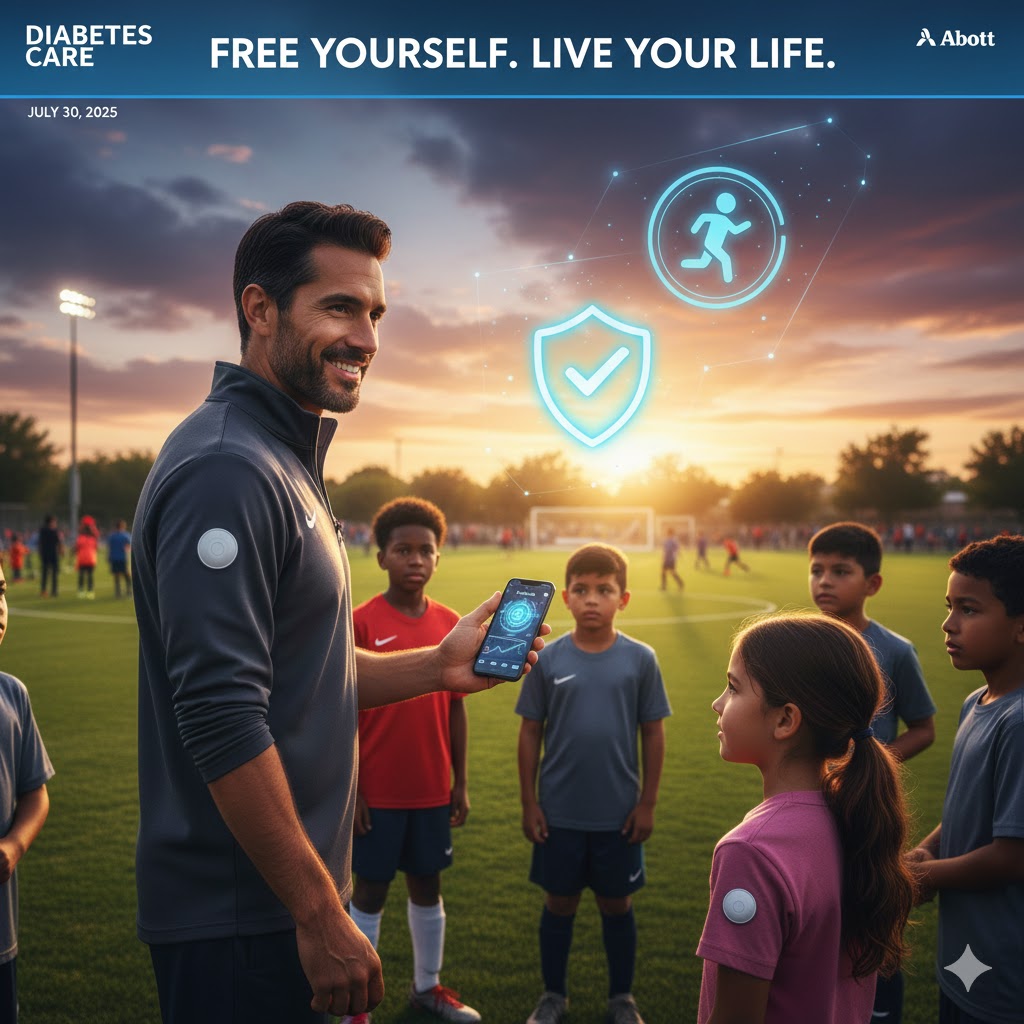
SHERIDAN, WYOMING – December 8, 2025 – In soccer, having the ball at your feet means you control the game – and for teacher and coach Gibran Juarez, managing Type 1 diabetes works the same way. Diagnosed at just 9 years old and teased by classmates for being “different,” he quickly learned that taking charge of his health wasn’t optional, it was essential. Today, with help from his FreeStyle Libre 3 Plus sensor, he’s turning that hard-earned experience into hope and confidence for his students and community.
Taking Back Control After a Tough Diagnosis
As a kid, Juarez loved soccer but struggled with the new routines that came with diabetes. School days were packed with classes, band, training and tournaments, and glucose checks often fell to the bottom of the list. “Testing my glucose was very difficult, especially in middle school and high school when I was more involved in activities,” Juarez recalls. “I often forgot. I was not testing my glucose, and I was not giving myself the proper insulin dosage.”
That lack of control wasn’t just about numbers on a meter; it affected how he felt about himself. Being diagnosed so young, and almost immediately facing hurtful comments, meant he was managing both his blood sugar and a growing sense of stigma. But over time, learning more about his condition – and finding tools that fit his life – helped him rebuild that sense of control.
“Diabetes is a lot like soccer,” Juarez says. “We need to have possession, or control of the game. Just like in diabetes, we need to have possession or monitor our glucose.”
Real-Time Glucose Insights for a Busy Life
For Juarez, a major turning point came when his endocrinologist introduced him to Abbott’s FreeStyle Libre systems. Continuous glucose monitoring technology allowed him to see his glucose in real time instead of relying only on fingersticks he might forget in a busy day. “I feel more educated because now I get to see what works and what doesn’t work in my lifestyle, with my foods, and the insulin dosages I take.”
Glucose is the body’s fuel, and for people living with diabetes, the pancreas doesn’t produce enough insulin or the body can’t use it properly. That’s why seeing trends and patterns matters so much. “I feel more educated because now I get to make sure my glucose levels stay steady,” Juarez says. “It provides a sense of peace because it's giving you an update every minute of the day.”
With companion apps like LibreLinkUp and LibreView, he can also share his glucose data with the people who care about him most. “My brother and girlfriend like that they get notifications because they care about me and want to make sure I'm okay,” Juarez says. “For example, if my glucose goes low, and I dismiss the alarm because either I'm teaching, coaching or playing soccer, they will call me as soon as possible and say, ‘Hey, your glucose is low. Are you okay?’”
Stigma Hurts – and Support Can Change Everything
The emotional side of diabetes can be just as challenging as the physical one. Juarez’s first memory of stigma still sticks with him. “It was time to make teams for dodgeball, and some classmates said, ‘You can’t play with us. You’re contagious,’” Juarez recalls. “There was a lot of teasing that I was going to contaminate people, and I was so afraid of being different.”
He was so afraid of being judged that he even hid his diagnosis from the school nurse. “I was so afraid and ashamed of living with diabetes. And, for a year and a half, I would hide it. I would go to the restroom before lunch to test my blood sugar and take my [insulin] injection.”
He’s far from alone. In an Abbott-led survey of more than 2,600 people with diabetes across eight countries, nearly 70% said they believe there is stigma around their condition, and 40% said they’ve skipped or missed a healthcare appointment because of it. At the same time, nearly 70% said supportive comments from others can significantly boost their motivation to manage diabetes.
Finding Community – and Becoming the Role Model He Needed
A key shift for Juarez came when his endocrinologist suggested diabetes camp. There, surrounded by kids who were also testing, dosing and learning, he realized he wasn’t alone. “As a kid, it gave me hope learning that there are others living with diabetes, and that they’re no different from you or me,” Juarez says.
That experience planted a seed. Years later, he chose to become a teacher and coach so he could be the supportive adult he once needed. In the classroom and on the field, he shows kids that managing a condition doesn’t make you less capable – if anything, it can make you more resilient, more organized and more empathetic to others.
"There’s always someone that needs help or support,” Juarez says. Be that person if you can. “Be a superhero and love yourself too because you are amazing. You can change the world. You just have to live, love life and put a smile on your face.”
3 Ways Tech and Teamwork Help Kick Diabetes Stigma
- Knowledge instead of fear: Real-time glucose data helps turn uncertainty into understanding, making diabetes feel more manageable day to day.
- Shared responsibility: Apps that let loved ones and doctors see your glucose can create a “support squad” that checks in when you’re too busy to notice an alert.
- Positive role models: Teachers, coaches and friends who talk openly about diabetes can show kids that a diagnosis doesn’t define their dreams.
From a scared fifth-grader on the dodgeball court to a confident teacher and coach, Juarez’s story is a reminder that tech, community and self-belief can transform how we live with diabetes – and how we talk about it. Watch his story and see how he uses his FreeStyle Libre 3 Plus sensor at https://bcove.video/4lQ8yqT.