Medical News

ALS Northwest Wraps 2025 With a Bigger Bet on Research — and a Message of Urgency for Families

Submitted by newsonline24_team on

SHERIDAN, WYOMING – December 30, 2025 – ALS Northwest says it increased its financial investment in ALS research throughout 2025, aiming to accelerate new approaches to treatment, prevention, and understanding at a time when momentum can’t afford to slow.

Why This Matters Beyond the Headline

For many people, ALS can feel like a diagnosis that changes the meaning of time overnight—days get measured in appointments, adaptations, and the quiet courage of figuring out “what now.” That’s why research funding isn’t an abstract talking point. It’s hope with a deadline attached, and it’s the difference between progress moving forward or stalling out.

ALS Northwest says its 2025 push is designed to speed up innovative science and strengthen the broader ALS community’s path toward better outcomes. The organization also frames this work as part of a larger, collaborative effort across the United States.


HYMPAVZI: Once-weekly hemophilia treatment cuts bleeds by 93% in patients with inhibitors

Submitted by newsonline24_team on

SHERIDAN, WYOMING – December 10, 2025 – For many people living with hemophilia, treatment is already demanding—regular infusions, constant planning, and the worry of a bleed that can disrupt everything. But for those who develop “inhibitors,” standard therapies may stop working, turning daily life into a much more dangerous balancing act. New Phase 3 data from Pfizer now suggest that the once-weekly treatment HYMPAVZI® (marstacimab) could offer these patients a very different outlook.

When hemophilia treatments suddenly stop working

Hemophilia A and B are rare genetic bleeding disorders where the blood can’t clot properly. For decades, the usual approach has been factor replacement therapy, giving patients the clotting factor their bodies are missing.

Lucile Packard Children’s Hospital Stanford earns fifth straight top maternity-care honor

Submitted by newsonline24_team on

SHERIDAN, WYOMING – December 10, 2025 – For expectant parents, choosing where to give birth is one of the biggest decisions they make—and a new milestone from Lucile Packard Children’s Hospital Stanford offers extra peace of mind.

Five years of ‘high performing’ maternity care

For the fifth year in a row, Lucile Packard Children’s Hospital Stanford has received the prestigious “High Performing” designation for maternity care from U.S. News & World Report. Fewer than half of the more than 800 U.S. hospitals evaluated earn this rating, which is reserved for hospitals that deliver outstanding care for uncomplicated pregnancies and births.

What Is the Universal Blood Type – And Why O-Negative Donors Matter So Much

Submitted by newsonline24_team on

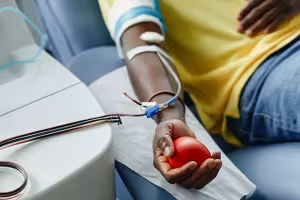
SHERIDAN, WYOMING – December 8, 2025 – Every two seconds, someone in the United States needs blood, whether it’s a new mother recovering from blood loss, a cancer patient in treatment, or a person injured in an accident. With around 5 million Americans needing transfusions each year, donated blood is literally a lifeline – and people with the universal blood types play a uniquely powerful role in keeping that lifeline flowing.

Why Blood Donations Matter Every Second

Blood can’t be manufactured or replaced with a lab-made substitute. Every unit comes from a volunteer rolling up their sleeve. One whole blood donation can potentially help up to three people, which means even a single visit can ripple out far beyond what most donors ever see.

How Often Can You Donate Blood? Turning a Good Deed into a Life-Saving Routine

Submitted by newsonline24_team on

SHERIDAN, WYOMING – December 8, 2025 – Not many things compare to the feeling of helping save a life, and every time you donate blood, you’re potentially helping as many as three people. Whether you’ve just made your first donation or you’re thinking about going back again, understanding how often you can safely donate makes it easier to turn that generous impulse into a powerful habit.

Why Regular Blood Donors Matter So Much

Each year, around 5 million Americans need a blood transfusion — from new mothers replacing blood loss, to people injured in accidents or natural disasters, to patients living with serious medical conditions. A person in the U.S. needs blood every two seconds, which means demand never really stops.