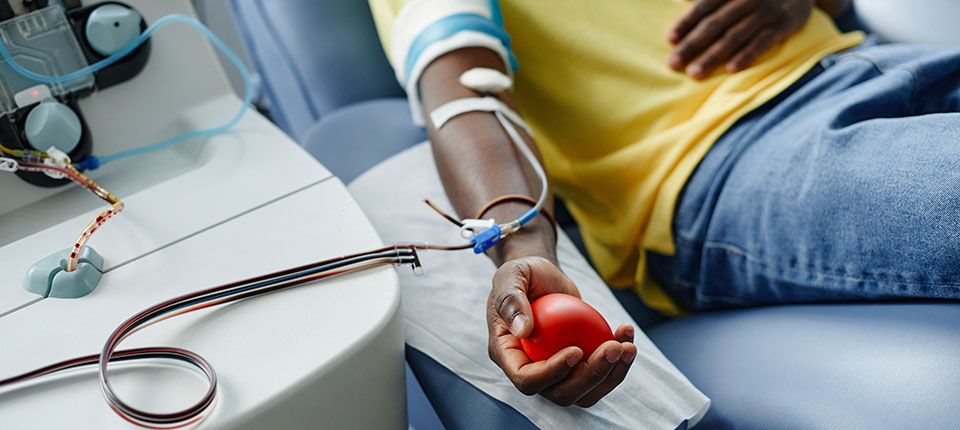
SHERIDAN, WYOMING – December 8, 2025 – Every two seconds, someone in the United States needs blood, whether it’s a new mother recovering from blood loss, a cancer patient in treatment, or a person injured in an accident. With around 5 million Americans needing transfusions each year, donated blood is literally a lifeline – and people with the universal blood types play a uniquely powerful role in keeping that lifeline flowing.
Why Blood Donations Matter Every Second
Blood can’t be manufactured or replaced with a lab-made substitute. Every unit comes from a volunteer rolling up their sleeve. One whole blood donation can potentially help up to three people, which means even a single visit can ripple out far beyond what most donors ever see.
When there’s time, doctors always prefer to match a patient with their own blood type. But in emergencies, when the clock is ticking and a patient’s blood type isn’t known yet, hospitals rely on universal donor blood to act fast and safely. That’s where certain rare types – especially O-negative and AB plasma – become absolutely critical.
O-Negative: The Universal Red Blood Cell Donor
When we talk about “universal donor” in terms of red blood cell or whole blood transfusions, type O is the star. Type O red blood cells are compatible with all major blood types, and O-negative is considered the universal red blood cell type that can be used in urgent situations for nearly anyone. It also plays a key role in protecting mothers and unborn babies when blood types may be different.
About 45% of people in the U.S. have type O blood, but only around 7% have the especially valuable O-negative type. That tiny slice of the population is in high demand, because their red blood cells can be given to patients of any major blood type when there’s no time to wait for lab results. The more O-negative donors step up regularly, the better hospitals can respond when seconds count.
AB Plasma: The Other Universal Hero
Red blood cells aren’t the whole story. For plasma transfusions, the rules flip: AB plasma is the universal plasma type. People with AB blood can donate plasma that’s compatible with recipients of all major blood types.
Because platelet units contain plasma, this compatibility extends to platelets as well, making AB donors incredibly valuable in situations where plasma or platelets are needed. Less than 4% of people in the U.S. have AB blood, which makes it the rarest type – and another reason why these donors are so important.
Mini FAQ: Understanding Blood Types in Simple Terms
- What determines my blood type?
Your blood type is defined by which antigens (A or B) are present on your red blood cells and whether you have the Rh factor, a protein antigen. - What do the letters A, B, AB and O mean?
- Type A: A antigen on red cells, Anti-B antibodies
- Type B: B antigen, Anti-A antibodies
- Type AB: Both A and B antigens, no antibodies
- Type O: No antigens, Anti-A and Anti-B antibodies
- What does “positive” or “negative” mean?
It refers to the Rh factor. If you have it, you’re Rh-positive; if not, you’re Rh-negative. Rh status is especially important in pregnancy because certain antibodies can cross the placenta and affect the baby. - Who is the universal red cell recipient?
People with AB blood have both A and B antigens and no antibodies against red cells, so they can receive any red blood cell type.
Why Matching Matters – and When “Universal” Steps In
If you receive a red blood cell type that isn’t compatible with your own, your antibodies can attack those cells and make you very sick. Similarly, if a plasma or platelet unit isn’t compatible, antibodies in that plasma can attack your red blood cells. That’s why careful matching is the norm for transfusions.
But in emergencies or when there’s a shortage of a specific type, universal donations are lifesavers. Type O blood – especially O-negative – can be used as a unique whole blood unit that contains everything a bleeding trauma patient needs: red cells, plasma and platelets. AB plasma can help when any patient needs plasma support, regardless of their red cell type.
Thinking of Donating? Your Type Always Matters
Curious about your own blood type? Donating is one of the easiest ways to find out. Whether you turn out to be O-negative, AB, or any of the other types, your blood can help someone who needs it. Universal donors are vital in emergencies, but all blood types are needed continuously to keep supplies stable throughout the year.
If you’re eligible and want to support lifesaving transfusions, sign up to donate at https://bigten.org/abbott/.