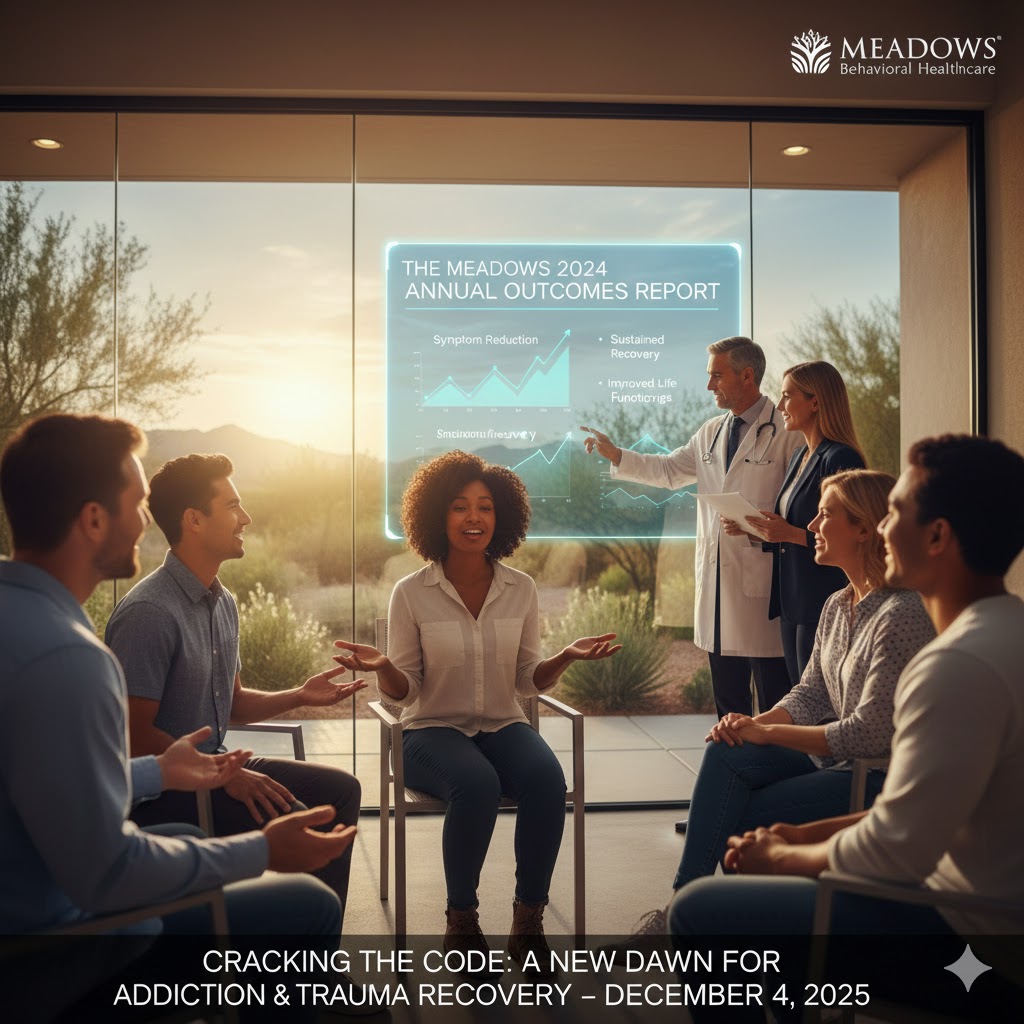
SHERIDAN, WYOMING – December 4, 2025 – When you or someone you love is looking for help with addiction, trauma, or mental health struggles, one question matters more than any other: does treatment actually work? The Meadows, a nationally recognized leader in trauma and addiction care based in Wickenburg, Arizona, has released its 2024 Annual Outcomes Report – and the data offers reassuring, real-world evidence that change is not only possible, but can last well beyond discharge.
Why outcomes data matters when you’re choosing treatment
In a world full of glossy brochures and emotional testimonials, independently collected outcomes data is a powerful way to cut through the noise. For this first report, The Meadows partnered with Vista Research Group, which tracks symptoms and life changes during treatment and then follows patients for up to a year afterward.
Instead of focusing only on how people feel in the final week of a residential stay, the report looks at how they’re doing months later – whether they’re still abstinent from substances, how their anxiety and depression symptoms have shifted, and what’s happening in their day-to-day lives. For families trying to weigh different options, that kind of transparency can be a huge source of confidence.
What the 2024 report reveals about recovery
Across residential, outpatient, and virtual programs, the outcomes point to strong, sustained progress. Patients who arrived with moderate to severe depression, anxiety, and PTSD saw meaningful reductions in symptoms over the course of treatment. Follow-up data shows that those gains don’t simply vanish once they leave campus.
For people with moderate to severe substance use disorders, abstinence rates after treatment consistently exceeded Vista’s broader behavioral health benchmarks, suggesting that The Meadows’ trauma-focused addiction care is helping patients maintain recovery in real life, not just in a controlled environment. Beyond symptom charts, the report highlights improvements in relationships, housing stability, work or school participation, and progress toward personal goals – the everyday markers of a life that feels worth living.
Group therapy and connection play a major role in that change. As former patient Jadon explains, "My group ended up being the key to the whole experience, the central part of my experience here, and the most meaningful part of my experience here. Hearing other people in addiction and recovery helped me open and explore these things that had been bottled up for so long."
Inside The Meadows’ approach: trauma, connection, and whole-person care
The report also reflects the core pillars that have shaped The Meadows over nearly five decades. Treatment is designed to address trauma, addiction, mental health, and co-occurring conditions together, rather than in isolation, using evidence-based therapies and neuroscience-informed tools.
Community is intentionally built into the process: group therapy, family involvement, peer support, and a continuum of care that can include residential, outpatient, and virtual options. Aaron Wilson, MD, Chief Medical Officer, puts it simply: "The data reinforces the heart of our work. Patients are making meaningful progress in symptoms, daily functioning, and long-term recovery. These results guide us, push us to keep learning and innovating, and help us strengthen the trauma-focused, integrated care that cultivates genuine, lasting change."
Mini FAQ: What this means if you’re considering The Meadows
Is The Meadows only for addiction?
No. The network treats trauma, addiction, psychiatric disorders, eating disorders, and other co-occurring conditions across a range of specialized programs.
Does the report cover virtual care too?
Yes. Outcomes span residential, outpatient, and virtual programs, giving a broader picture of how different levels of care contribute to recovery.
Why is independent data collection important?
Because Vista Research Group gathers and analyzes the data, the results don’t just reflect internal impressions – they’re measured using consistent, external tools and benchmarks.
What should I look for in the full report?
Pay attention to changes in symptom scores, abstinence rates over time, and quality-of-life measures like relationships, housing and work or school engagement. These show how treatment impacts everyday life.
For anyone weighing next steps, the 2024 Annual Outcomes Report offers something rare in behavioral healthcare: clear numbers behind the stories of healing. It shows that with specialized, integrated treatment and a strong sense of community, people can move beyond crisis and build a more stable, connected life – and keep that momentum going long after they leave.
View the full 2024 Annual Outcomes Report from The Meadows at www.themeadows.com/about/clinical-outcomes.