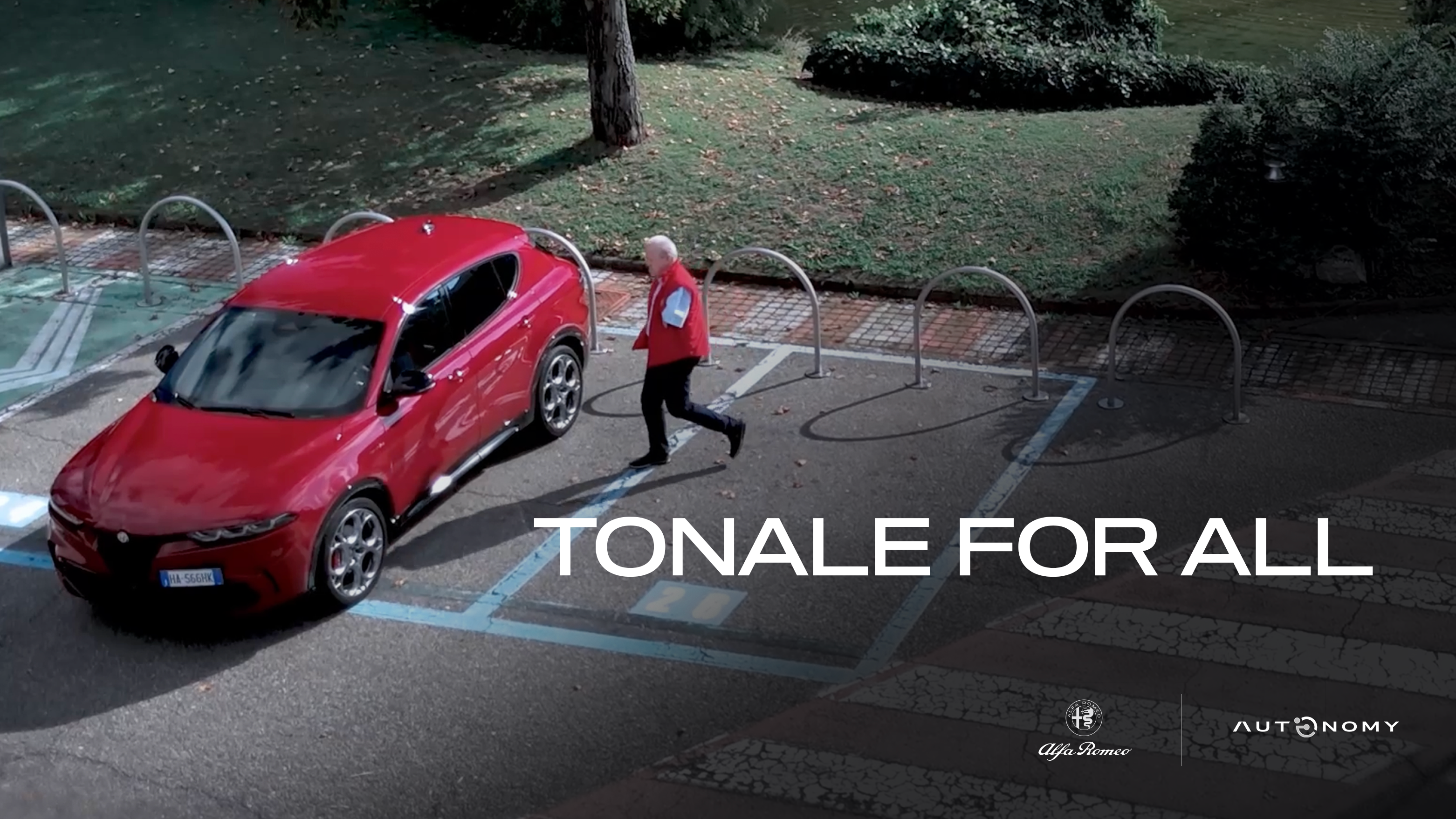
SHERIDAN, WYOMING – December 5, 2025 – For many people with upper limb disabilities, driving isn’t just about getting from A to B – it’s about freedom, dignity and the ability to decide your own day. To mark the International Day of Persons with Disabilities, Stellantis has unveiled the Alfa Romeo Tonale for All, a specially engineered version of the stylish SUV designed in Italy to put that independence firmly within reach.
A premium SUV reimagined for different abilities
Tonale for All takes all the character of a modern Alfa Romeo – design flair, comfort and technology – and layers in thoughtful adaptations you don’t see at first glance. Instead of feeling like an “afterthought conversion,” the changes are integrated into the car with the same level of care as its original interior.
The project was developed in collaboration with Stellantis’ research center CRF and specialist partner Fadiel Italiana. The goal: to create a car that drivers with reduced upper limb functionality can operate safely and confidently, while still enjoying the emotional side of driving that Alfa Romeo is known for. It’s a quiet but powerful example of how inclusive engineering can sit right at the heart of mainstream car design.
Steering with your feet: how the pedal steering system works
At the core of Tonale for All is the Pedal Steering System (DGS03), an electromechanical setup that lets drivers steer using precise pedal movements instead of conventional hand inputs. Two electric motors, dedicated batteries and control units create a fully redundant architecture designed with safety in mind.
A Thin-Film Transistor (TFT) display in the cabin constantly feeds back system status, helping drivers feel in control and informed at every moment. For someone who may not be able to use a traditional steering wheel in the usual way, this solution can transform driving from exhausting – or impossible – into something natural and enjoyable again.
An ergonomic console that puts every function within reach
To match the innovative steering system, Tonale for All features a raised, custom-built central console created using additive manufacturing. Its layout is carefully thought through so that key functions are close at hand and easy to operate.
On this single, ergonomic hub, drivers can manage:
- Transmission selection
- Horn and lights
- Electric parking brake
- Window controls
- Voice commands
- USB ports and connectivity
Edges are rounded and the structure is engineered to comply with ECE 21 crash safety standards, keeping intrusion to a minimum. The car has also been homologated as a unique specimen by the Italian Ministry of Infrastructure and Transport, underscoring that inclusion and safety are treated with equal seriousness.
3 ways Tonale for All supports everyday independence
- Less dependence on others. Being able to drive yourself – school runs, appointments, social visits – can dramatically reduce the need to rely on family or transport services.
- More dignity and spontaneity. Whether it’s a last-minute coffee with friends or a weekend escape, having your own adapted car brings back those spontaneous moments that make life feel full.
- A “normal” car that simply works for you. Instead of feeling like medical equipment on wheels, Tonale for All looks and feels like a stylish SUV, with adaptations that blend into the design.
Part of a wider movement toward inclusive mobility
Tonale for All doesn’t exist in isolation. It builds on earlier initiatives like Citroën’s Ami for All, created through Stellantis’ Star*up internal incubator and developed with PIMAS. That compact electric model focuses on wheelchair users, with easy cabin access, adapted controls and space to store the chair safely, making daily errands and social life more accessible.
In Italy, Stellantis has been driving this mission for three decades with its Autonomy Program. Launched in 1995, it now operates 14 Mobility Centers that offer driving assessments, psychological and motor-skill evaluations, and tailored advice on vehicle adaptations. More than 1,000 people each year receive support in choosing and configuring a car that matches their needs, across all Stellantis brands.
In the United States, the DriveAbility Program plays a similar role, working with adaptive equipment manufacturers to provide solutions for acceleration, braking, shifting and steering. From simply getting in to confidently getting going, the focus is the same: keeping people active, independent and mobile.
Through projects like Tonale for All – and the broader Autonomy and DriveAbility ecosystems – Stellantis is sending a clear message: the future of mobility must be designed for everyone. That means advanced engineering, yes, but also respect, empathy and a refusal to compromise on safety, performance or style.
Learn more about Stellantis Autonomy centers and accessible mobility solutions at https://www.stellantisautonomy.com/.