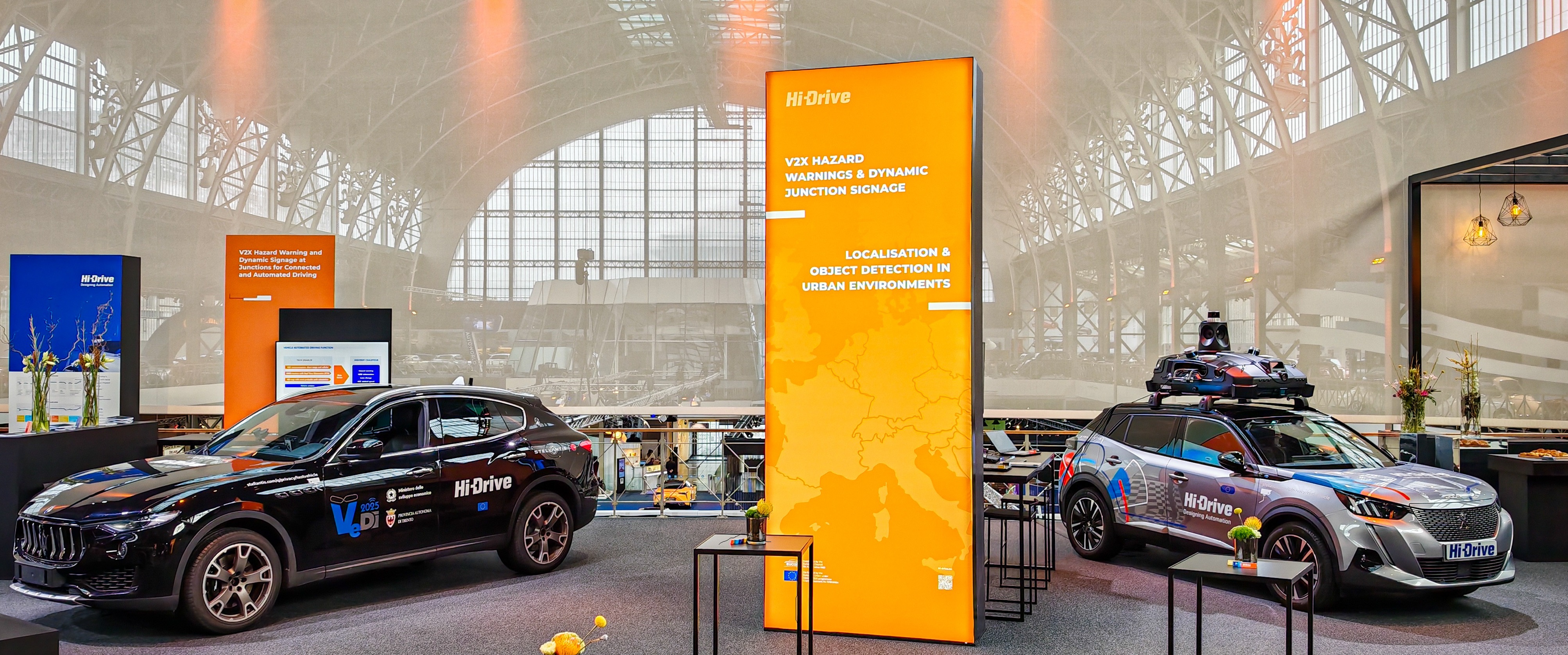
SHERIDAN, WYOMING – December 5, 2025 – Parallel parking in a tight space, creeping through city traffic, dealing with surprise roadworks – for most drivers, these are the moments that make journeys stressful. At the Hi-Drive Final Event in Brussels, Stellantis gave a glimpse of a future where much of that strain is handled by next-generation automated driving tech, showing how cars could soon help us navigate complex real-world conditions more calmly and safely.
A European “flagship” project for smarter, calmer mobility
Hi-Drive is Europe’s flagship project dedicated to advancing vehicle automation and making higher levels of automated driving work not just in perfect test conditions, but in messy, everyday environments. Think crowded city centers, multi-lane ring roads, changing weather and unpredictable traffic.
Stellantis used the Brussels event to show how closely it’s involved in shaping that future. “Hi-Drive is a great example of open innovation, giving us the opportunity to develop and test automated driving technologies with leading European partners. By working together, we can deliver practical and reliable solutions that make everyday mobility safer and easier for everyone,” said Anne Laliron, SVP of Technology Research at Stellantis.
For everyday drivers, that “open innovation” translates into cars that quietly watch the road from every angle, talk to traffic lights and other vehicles, and warn you about hazards you can’t yet see.
Two demo cars that see more than the human eye
At the event, Stellantis brought two “Living Lab” vehicles to life:
- Peugeot e-2008 – This fully electric SUV was fitted with a rooftop sensor module packed with eight LiDARs, nine cameras, four radars and V2X (vehicle-to-everything) communication using both short-range and cellular tech. In everyday language, that means 360° vision, the ability to “feel” the environment and to talk to nearby infrastructure and vehicles. The goal: validate automated functions that can handle dense urban traffic and complex city scenarios.
- Maserati Levante (MY2018) – This luxury SUV demonstrated V2X communication and high-definition mapping to support real-time hazard alerts and recognize dynamic road signs. Imagine your car knowing about a sudden lane closure or accident ahead because it’s getting live updates from the road network, not just from what the driver can see.
Both vehicles hint at a world where advanced connectivity and automation work together to help you make better, safer decisions – and sometimes to let the car quietly take on the most tedious driving tasks.
Editorial Extra: What this self-driving tech could mean for you (3 everyday examples)
- Less stress on busy routes
On long commutes or holiday traffic jams, automated assistance could handle lane-keeping, distance to the car in front and speed adjustments, leaving you more relaxed when you actually arrive. - Earlier warnings about trouble ahead
If your car can receive hazard alerts and read dynamic signs in real time, you might get notified of black ice, sudden queues or temporary speed limits before they become a nasty surprise. - Safer city driving for families
With 360° sensing and V2X, future systems could spot a cyclist in your blind spot or a pedestrian stepping off the curb faster than a human alone, helping avoid near misses in busy neighborhoods.
From smart assistance today to driverless rides tomorrow
Stellantis is already rolling out advanced driver-assistance systems (ADAS) that many drivers are starting to recognize: real-time traffic info, adaptive cruise, lane centering and Level 2+ hands-free highway functions in selected models. These are stepping stones – designed to be intuitive, easy to trust and always centered on helping the driver.
At the same time, the company is working on higher levels of automation, including Level 4 driverless vehicles for robotaxi services around the world. Two parallel collaborations power this push: one with NVIDIA, Uber and Foxconn, and another with Pony.ai. Both are focused on scalable, cost-efficient driverless mobility solutions, built on Stellantis AV-Ready platforms™ that can be adapted for everything from people movers to commercial vehicles.
Shaping cities where cars and infrastructure talk to each other
Future highly automated vehicles will rely on strong connectivity to swap information with other vehicles and with the city itself. Stellantis is testing short-range and 5G cellular communication to share live data on traffic, hazards and road conditions – a key ingredient in making automation reliable in the real world.
As these technologies mature, the vision is clear: cities where traffic flows more smoothly, accident risks are reduced, and drivers can choose when to be fully in control and when to lean on the car’s intelligence.
By investing in projects like Hi-Drive and by partnering broadly, Stellantis is betting on a future where mobility is increasingly driverless, highly connected and more sustainable – not just for tech fans, but for anyone who wants their everyday journeys to feel simpler, safer and less exhausting.
Learn more about Stellantis and its automated driving projects at https://www.stellantis.com.