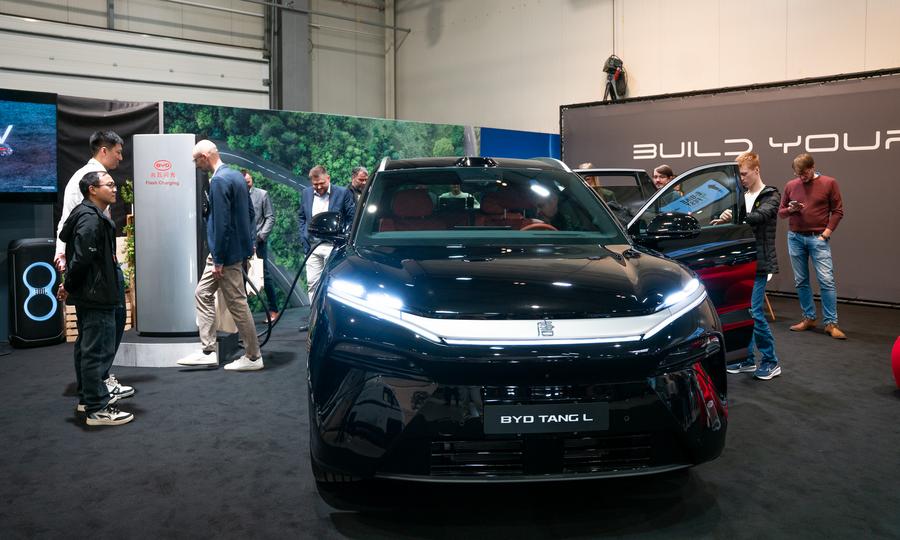
SHERIDAN, WYOMING – December 15, 2025 – Finland’s electric-vehicle shift is moving fast—and Chinese car brands are starting to feel less like “newcomers” and more like a normal part of the showroom conversation. A new industry view from Helsinki suggests that as more drivers swap gasoline habits for charging routines, brands like MG, BYD, and Polestar are becoming increasingly visible choices for everyday, price-aware consumers. The result is a market story that’s less about hype and more about practical value in the middle of Europe’s EV transition.
Finland’s EV Transition Is Accelerating—and Buyers Are Watching Closely
According to Tero Lausala, CEO of the Finnish Central Organisation for Motor Trades and Repairs (Autoalan Keskusliitto, AKL), Chinese manufacturers made up about 4 percent of new-car sales in Finland during the first 10 months of 2025. That may sound modest, but he says the direction of travel is clear—especially as EV adoption rises.
Finland’s broader EV momentum provides the backdrop: the share of fully electric cars in new registrations is expected to reach 34–36 percent in 2025, up from below 30 percent in 2024. In a country where winter is real and driving decisions tend to be rational, that kind of shift usually signals long-term change rather than a temporary trend.
Why Chinese Brands Are Getting More Attention in the Electric Vehicle Segment
Lausala points to the combination that often wins consumers over: innovation that feels useful, plus pricing that feels fair. In his view, Chinese car brands are benefiting from “advancement in technology, innovation and cost competitiveness,” particularly in the fast-expanding EV category.
And specific names are showing momentum. "We have noticed that MG, BYD and Polestar are on the rise," he said, while noting that volumes are still smaller than Finland’s most established brands. Still, visibility matters—because once a brand becomes familiar, it starts to feel less risky.
The Numbers Behind the Momentum: MG, BYD, and Polestar Gains
Official registration data in the report highlights standout growth, especially for MG. Data from the Finnish Transport and Communications Agency Traficom show MG’s sales in Finland in the first ten months of 2025 surged by 475 percent year-on-year, the fastest growth among all brands. Polestar’s sales increased 105 percent, and BYD also posted solid gains.
In the battery-electric vehicle (BEV) segment specifically, Polestar ranked eighth with a 5.7 percent share, followed by BYD at 2 percent and MG at 1.2 percent. If you’re a consumer, the takeaway is simple: these aren’t “niche” numbers anymore—they’re the beginning of a real competitive footprint.
What Finnish Consumers Actually Care About—and Why That Helps EV Challengers
Finland’s buyers tend to do homework before committing, and local media coverage of new models can build confidence. Lausala described a strong appetite for tech—and also the mindset behind it: "Finns are interested in innovations and the versatility of products coming from China, which is changing at a fast rate," he said.
But the bigger point may be how practical the shopping checklist is. He added that Finnish buyers tend to be "price-conscious and very pragmatic," with charging speed, battery range, and warranty conditions among their key priorities—areas where Chinese brands have been improving quickly.
Editorial Extra: Mini FAQ for EV Shoppers in Finland and the EU
Q: Which price range looks like the “sweet spot” for growth?
A: Lausala pointed to mid-priced fully electric models, especially between 20,000 euros and 40,000 euros.
Q: What could slow adoption of newer brands?
A: After-sales support. "They need both an importer and local retailers with a long-term commitment and relationship," he said.
Q: What’s the non-negotiable for long-term trust?
A: Service access. "The availability of service and repairs is essential for growth."
What Happens Next: Service Networks, Partnerships, and a Bigger EU Trajectory
Beyond consumer sales, Lausala also sees opportunities for industrial cooperation—especially in software, charging technology, and related equipment. "Contacts with China are important for our organization," Lausala noted, adding that AKL regularly organizes delegations to China for its members.
Zooming out, the broader European trend supports the idea that Finland isn’t alone. Data from JATO Dynamics cited in the report show that Chinese car brands nearly doubled their market share in Europe in the first half of 2025, reaching a record 5.1 percent, while registrations of Chinese-made cars rose 91 percent year-on-year. Forecasts suggest their share in Europe could approach 10 percent by 2030—making Finland’s “early momentum” look like part of a larger shift.
Learn more about Finland’s official vehicle registration and power-source statistics at https://tieto.traficom.fi/en/statistics/statistics-power-sources-road-vehicles-registered-first-time.