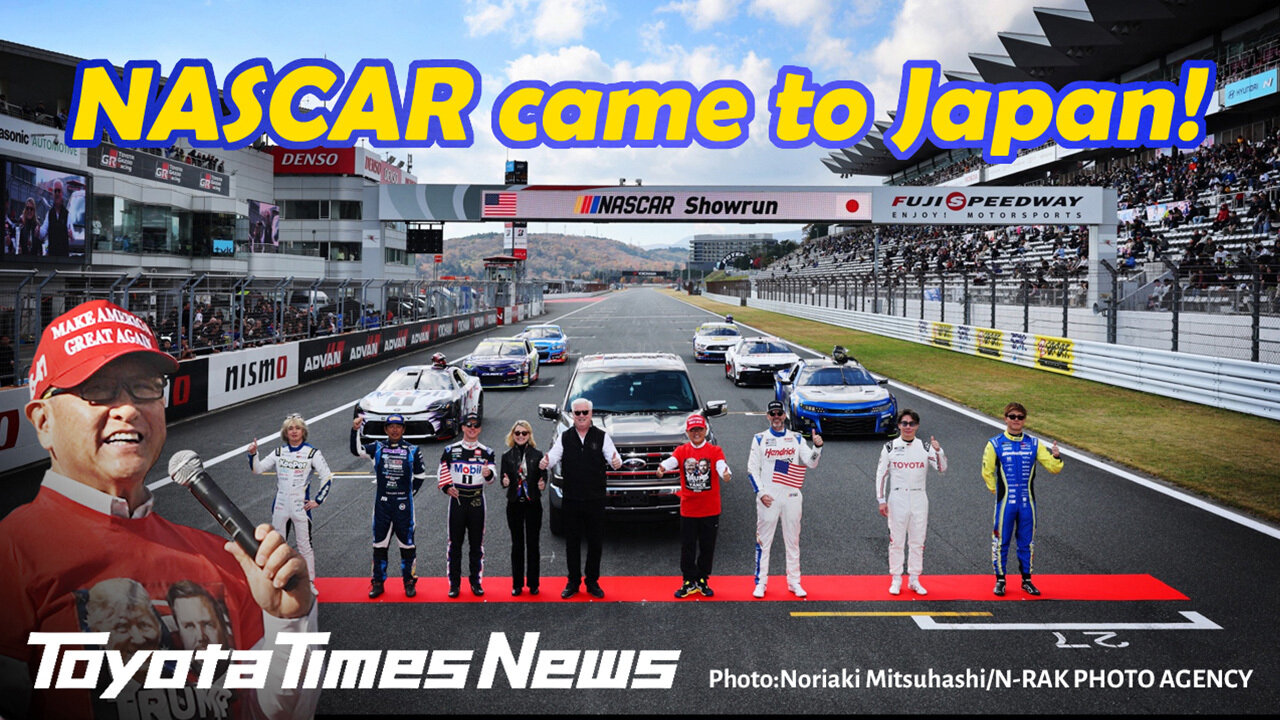
SHERIDAN, WYOMING – December 5, 2025 – On a cool November weekend at Fuji Speedway, the air above Mount Fuji filled with the deep roar of NASCAR stock cars – and for thousands of Japanese fans, it felt like a piece of American motorsport had landed right in their backyard. The special showrun during the Super Taikyu season finale wasn’t just about noise and speed; it was about “cultural exchange between the U.S. and Japan through motorsports” and a new chapter in the relationship between the two car-loving nations.
NASCAR thunder over Mount Fuji
On November 16, day two of the Super Taikyu finale in Shizuoka Prefecture, six NASCAR machines shipped over from the United States took to the track. Behind the wheel were top drivers from both countries, including Kamui Kobayashi, trading their usual machinery for the raw, big-hearted character that makes American stock cars so addictive to watch.
Crowds packed the venue to feel – not just hear – the thunderous showrun. In the U.S., NASCAR routinely draws more than 100,000 fans to the track each race weekend and delivers TV ratings second only to the Super Bowl. Bringing that energy to Fuji gave Japanese fans a rare close-up of the series Toyota has competed in since 2000 with its U.S.-built Camry, which also joined the demonstration.
The day had a distinctly international flavor, with U.S. Ambassador to Japan George Glass and Automobile Business & Culture Association of Japan Chairman Akio Toyoda on hand. Together, they highlighted how shared passion for cars and racing can create connections that go well beyond the track.
Motorsport as a living bridge between two car cultures
For Chairman Toyoda, the event was a chance to blend deep respect for American racing culture with Japan’s own rich motorsport heritage. With the United States preparing to celebrate its 250th anniversary in 2026, he even floated a bold idea for the future of the series: “a NASCAR class in Super Taikyu.”
It’s an appealing thought for fans on both sides of the Pacific. Super Taikyu is already known for its multi-class endurance battles and mix of production-based cars; adding a NASCAR flavor would bring even more spectacle and sound. And for Toyota, which straddles both worlds, it’s the perfect canvas to show how one brand can speak fluently in multiple motorsport “languages” at once.
Two days before the showrun, Toyoda took to Fuji himself as “Morizo,” test-driving the Camry and getting a feel for the car that carries Toyota’s badge in America’s biggest racing series. For enthusiasts, that kind of hands-on leadership sends a clear message: the people at the top still care deeply about the joy of driving.
From roaring ovals to quiet battery cells in North Carolina
The second half of this America-themed story plays out far from Japan, at Toyota Battery Manufacturing, North Carolina (TBMNC) – the company’s first overseas battery plant. On November 12, the facility held its opening ceremony, marking the start of a massive long-term commitment to electrified mobility in the United States.
With around $14 billion invested, TBMNC will build batteries for hybrid electric vehicles (HEVs), plug-in hybrids (PHEVs) and battery electric vehicles (BEVs), creating up to 5,100 new jobs and serving as a key manufacturing hub. Toyota also announced plans to invest up to an additional $10 billion in its U.S. operations over the next five years, bringing total investment since entering the market about 70 years ago to roughly $60 billion.
While NASCAR cars thunder around ovals, the quiet work in North Carolina’s clean rooms is just as important for the future of mobility. Together, the Fuji showrun and TBMNC’s launch tell a bigger story: the same company that celebrates fuel-burning racing at full volume is also investing heavily in making electrified vehicles more accessible for everyday drivers.
Editorial extra: Quick FAQ – What’s special about this U.S.–Japan motorsport moment?
Q: Why is NASCAR running at Fuji a big deal?
A: NASCAR is the top motorsport in the U.S., rarely seen live in Japan. Bringing six real cars and star drivers to Super Taikyu turns a domestic series finale into an international motorsport festival.
Q: How is Toyota tying racing to everyday driving?
A: By racing in NASCAR with the Camry and investing in TBMNC, Toyota links its American motorsport presence to the batteries that will power tomorrow’s electrified road cars.
Q: What does this mean for fans in Japan?
A: It opens the door to more U.S.–Japan crossover events, fresh racing formats – like a potential “NASCAR class in Super Taikyu” – and a deeper sense that car culture is something to be shared, not kept inside national borders.
As engines echo off Fuji’s mountains and battery lines hum in North Carolina, one idea ties everything together: cars are still an emotional language the U.S. and Japan both speak fluently, from the grandstands to the factory floor.