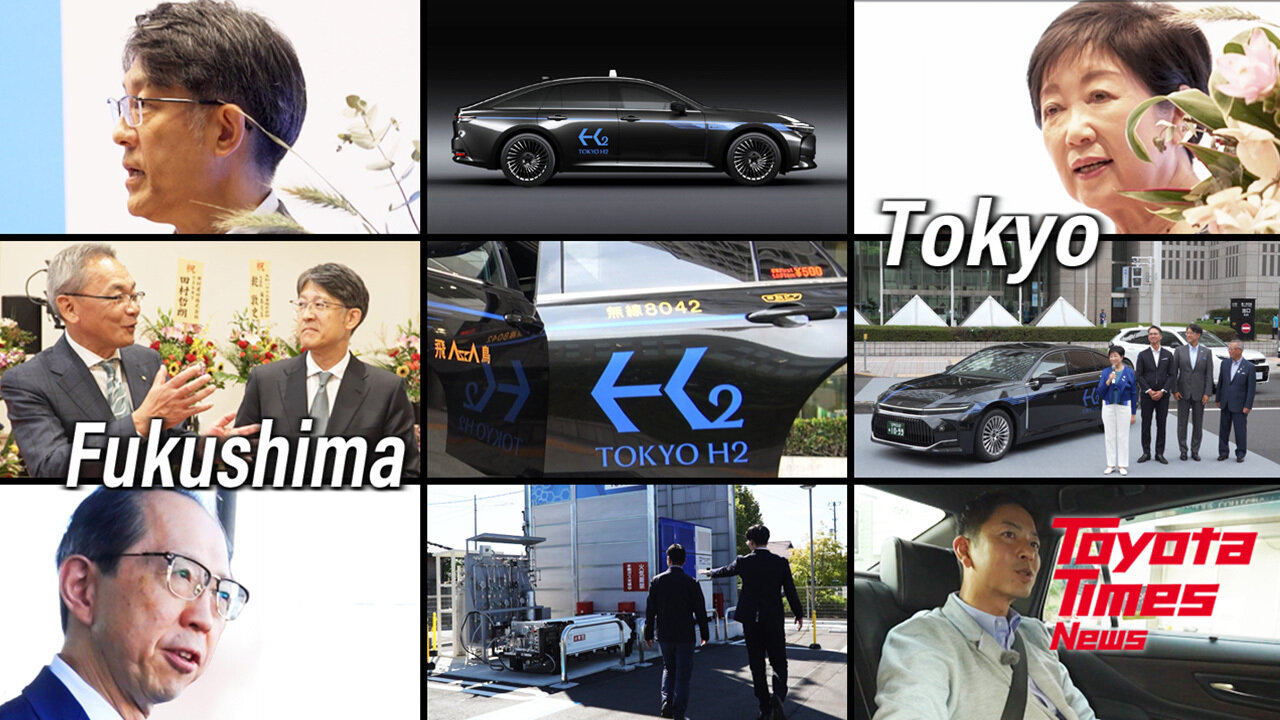
SHERIDAN, WYOMING – December 5, 2025 – Imagine hailing a taxi in the middle of Tokyo, gliding away from the curb in near silence and realizing the car under you runs on hydrogen, not gasoline. That’s not sci-fi anymore – it’s the new reality in Japan’s capital, where hydrogen is stepping out of the lab and into everyday life, one ride and one building at a time.
Hydrogen on the streets: Crown taxis you can actually ride
On the busy streets of Tokyo, a new kind of Crown taxi has started to appear: a fuel cell electric vehicle (FCEV) powered by hydrogen. These taxis are part of a public-private project launched by the Tokyo Metropolitan Government in September 2025 to push hydrogen from “future promise” to “practical option.”
Drivers say the big sedans take some getting used to on narrow streets, but once they’re in the flow, the feedback is glowing: the cars are “quite cool,” incredibly quiet and surprisingly quick off the line thanks to instant electric torque. For passengers, the experience feels premium – and yet the base fare remains ¥500 (at the time of filming), the same as a regular cab, which makes choosing the cleaner option almost a no-brainer.
Right now, only a handful of these hydrogen taxis are in service. But by the end of fiscal 2025, the plan is to have around 200 Crown FCEV taxis on the road. That means more chances for everyday Tokyoites – and curious visitors – to literally sit in the front row of Japan’s hydrogen experiment.
Behind the scenes, each ride also serves a second purpose: collecting real-world data. By tracking how, when and where hydrogen taxis are used, partners can fine-tune everything from refuelling infrastructure to supply planning. Toyota President Koji Sato, who also co-chairs the Japan Hydrogen Association, calls it “a tremendous first step with meaningful implications for large-scale social implementation.”
From racetracks to rural showrooms: hydrogen beyond the big city
Hydrogen’s story doesn’t stop at urban taxis. In Fukushima Prefecture, a region already known for its energy transition efforts, Netz Toyota Koriyama has opened the Asaka dealership – the first in Japan designed to fully lean on hydrogen.
Instead of treating clean energy as a distant concept, the showroom itself runs on it. A stationary fuel-cell generator, using the same core system as the Mirai, produces electricity for the site. The hydrogen tanks feeding it come from repurposed fuel-cell trucks, cleverly reusing components and know-how developed on the automotive side.
On the roof and around the building, you’ll find something else futuristic: perovskite solar cells. Unlike traditional rigid panels, these are lightweight, thin and flexible, opening up new possibilities for where you can install them. The dealership is even testing different types – blue and black – to compare how efficiently they produce power.
Taken together, the hydrogen generator and solar cells turn the Asaka site into a real-world lab. It’s not just a place to buy cars; it’s a working example of how homes, businesses and mobility could all plug into a cleaner, smarter energy network.
From 24-hour races to daily routines: passion with a purpose
Hydrogen’s rise in Japan isn’t just about technology; it’s also about mindset. When Akio Toyoda – under his driver name “Morizo” – completed the grueling Super Taikyu 24-Hour Race in a hydrogen-powered Corolla, he summed up his philosophy in one line: “I believe that it is through ‘purposeful passion and action’ that we will create a future of carbon neutrality.”
That same purposeful passion now shows up in quieter forms: in a taxi gliding through Shinjuku, in a dealership in Fukushima humming on hydrogen and solar, and in the growing network of partners who are willing to experiment, learn and improve in public.
3 ways hydrogen is already touching everyday life in Japan
- A new kind of taxi ride
You can now step into a hydrogen-powered Crown in Tokyo, paying the same fare but enjoying a calmer, cleaner drive. - Dealerships that double as energy hubs
Sites like Netz Toyota Koriyama Asaka show how future buildings might generate and store their own clean power using fuel cells and advanced solar. - Motorsport as a test bed, not just a show
From hydrogen race cars to FCEV taxis, lessons from the track are flowing straight into vehicles and systems that anyone can use.
Hydrogen still has challenges to overcome – from infrastructure to cost – but Japan’s approach is refreshingly practical: put it into real use, learn fast and keep refining. Whether you’re hopping into a cab in Tokyo or walking past a quiet, glowing showroom in Fukushima, the “hydrogen society” is no longer an abstract slogan. It’s starting to feel like an everyday option, built by people whose passion is firmly pointed at the future.