SHERIDAN, WYOMING – December 4, 2025 – In a world where food insecurity is still a daily reality for millions, the city of São Paulo has turned its fight against hunger into a powerful global benchmark. On December 3, the Brazilian megacity was officially awarded a GUINNESS WORLD RECORDS™ title for operating the largest municipal food security program in the world, after distributing an astonishing 933.8 tonnes of food in just 24 hours – part of a network that now serves more than 3 million meals every single day.
A record built on solidarity, not spectacle
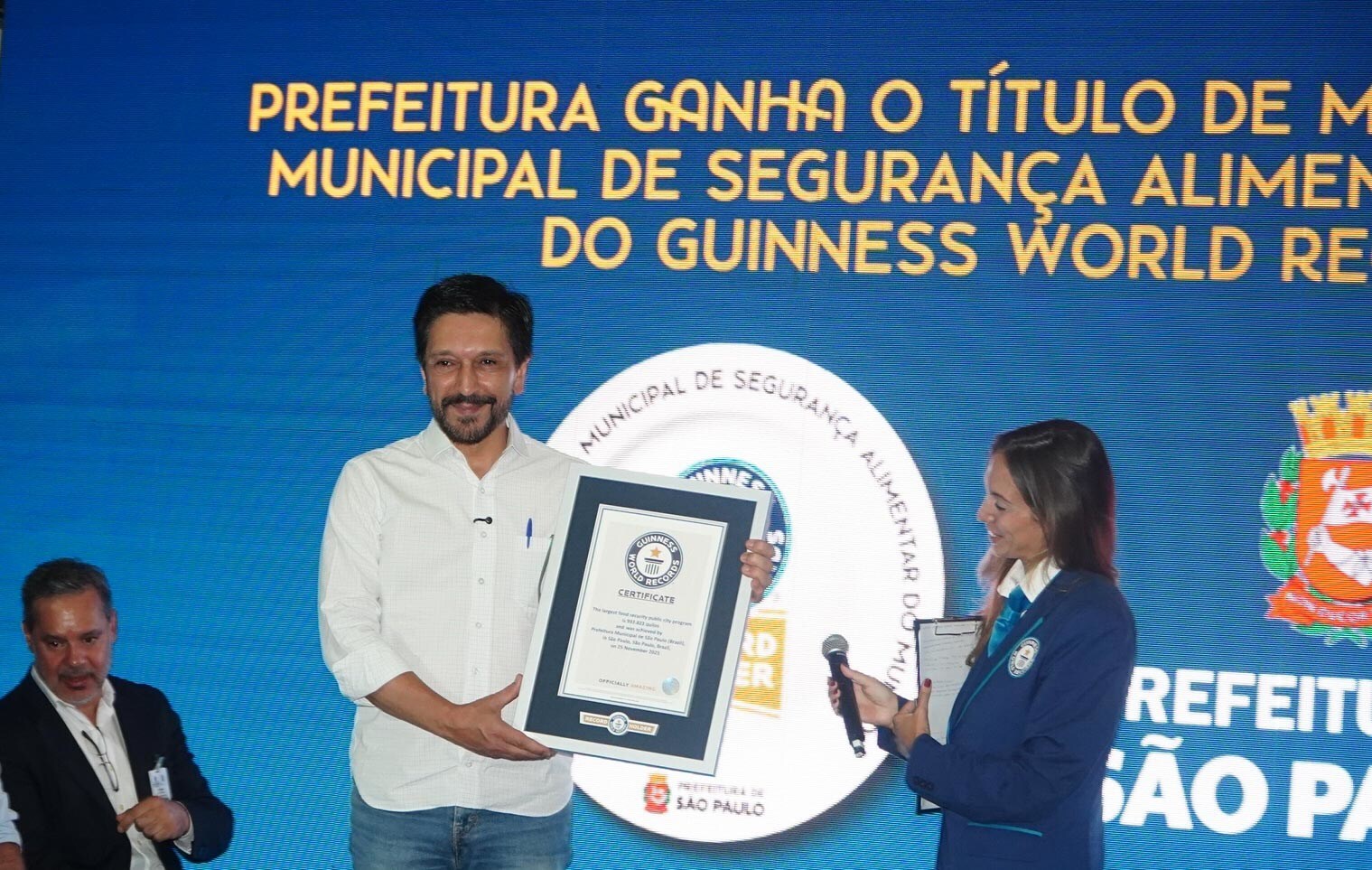
The recognition, presented by Guinness adjudicator Camila Borenstain in the low-income community of Paraisópolis in southern São Paulo, celebrates much more than a one-day feat. It crowns years of public policy aimed at guaranteeing dignified, continuous access to food for residents across the city.
For the official record attempt on November 25, São Paulo staged a massive mobilization for “Food Security Day,” involving more than 5,600 polling stations and 1,500 people in the streets to track and verify the distribution effort. The World Health Organization considers food security a fundamental human right, and São Paulo’s approach turns that principle into daily practice.
Receiving the certificate, Mayor Ricardo Nunes underlined the emotional weight of the achievement. “This achievement means a lot. Only those who have known hunger know what I am talking about. Only those who have seen someone suffer from hunger can measure the importance of a solid food program,” he said. For many families, the city’s network is the difference between constant worry and a basic sense of safety at mealtimes.
How São Paulo’s food network actually works
Behind the record lies an intricate system that combines prepared meals, fresh produce and essential food baskets. Several flagship programs work together to reach residents at different life stages and levels of vulnerability.
In the municipal school system alone, more than one million students receive five meals a day. For younger children in early childhood education, around 325,000 kids receive milk at home every month, helping to support nutrition during the crucial preschool years.
To directly address social vulnerability, the city distributes some 421,000 basic food baskets every month through its Cestas Básicas (basic baskets) and Cidade Solidária (solidarity city) programs. For adults and older residents in search of an affordable hot meal, Bom Prato Paulistano serves about 7,000 low-cost dishes daily.
Training kitchens, citizen chefs and fairer prices
Food security in São Paulo goes beyond feeding people today; it also invests in skills and long-term stability. Rede Cozinha Escola (School Kitchen Network) delivers 26,000 meals per day while offering professional training that can lead to employment in the food sector. Rede Cozinha Cidadã (Citizen Kitchen Network) prepares a further 15,000 meals daily in outlying neighborhoods, bringing both nourishment and economic activity to the city’s periphery.
At the same time, Armazéns Solidários (Solidarity Warehouses) help families stretch their budgets by offering discounts of up to 50% on staple foods for people registered in the federal CadÚnico social program. The Banco de Alimentos (Food Bank) complements these efforts by donating around 55 tonnes of food each month to social institutions, ensuring surplus produce doesn’t go to waste.
“Today, December 3, it is an honor to assess the path taken by the city of São Paulo: the largest municipal food security program,” said Guinness adjudicator Camila Borenstain, highlighting how the city’s model is now seen as an international reference point.
3 reasons this record matters far beyond São Paulo
- It shows what’s possible at city scale. A single municipality organizing more than 3 million meals a day proves that local governments can play a huge role in fighting hunger when programs are coordinated and long-term.
- It treats food as a right, not a charity. From school meals to subsidized warehouses, the focus is on stable access and dignity, not one-off donations or photo opportunities.
- It links food to opportunity. Training kitchens and citizen-focused networks turn food programs into tools for job creation, community building and better futures, not just short-term relief.
As São Paulo’s experience is celebrated on the global stage, it offers a hopeful blueprint for other cities: that with political will, community engagement and smart program design, it is possible to move from emergency food aid to a sustained, rights-based approach that touches every corner of urban life.
Learn more about São Paulo’s food security initiatives through the official communications and channels of the City of São Paulo.